Versions Compared

Key

  • This line was added.
  • This line was removed.
  • Formatting was changed.
Note
titleAttention!

You can specify the road lane borders by using the marking editing utility only. You cannot do that manually.

To work with the PR RR channel of the Traffic analysis module, you must specify the road marking settings. To do this, do the following:
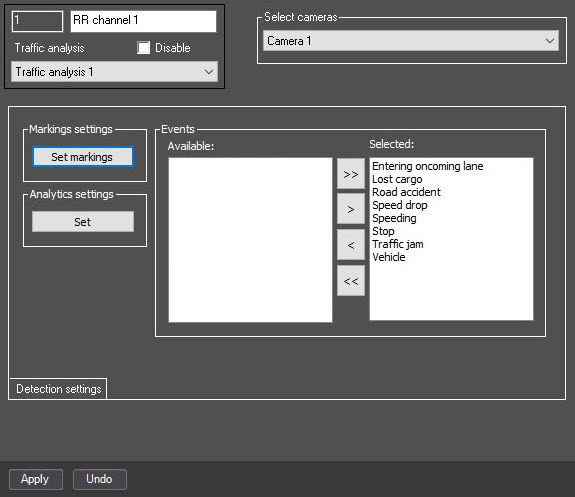
  1. Go to the settings panel of the PR RR channel object.
  2. Click the Set markings button on the settings panel to open the editing utility.
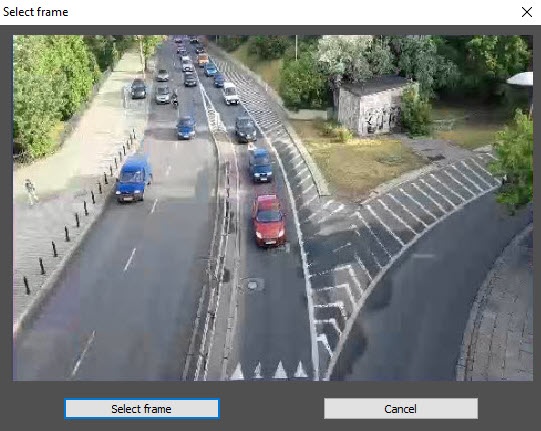
  3. In the Select frame window that opens, click the Select frame button to stop the video and specify the road marking in this frame.

    As a result, the marking editing utility opens.
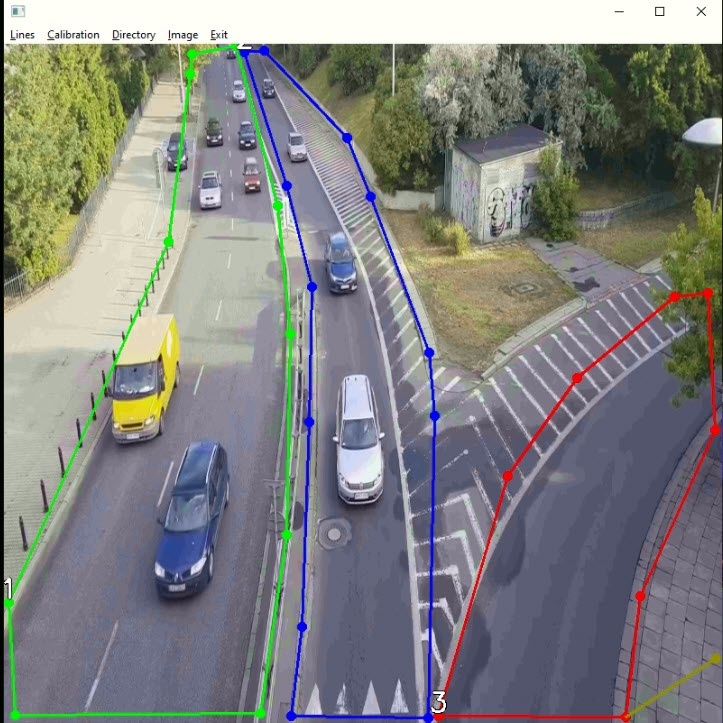
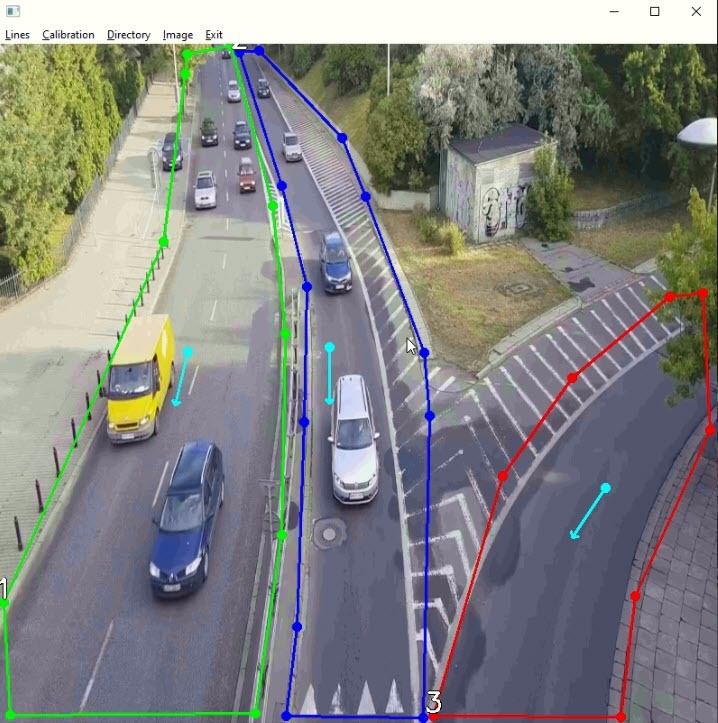
  4. In the editing utility that opens, mark traffic lanes on the selected frame of the video:
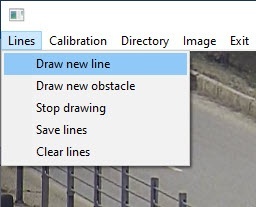
    1. Select the Lines Draw new line item in the menu line. Select Clear lines to delete a line.
    2. Mark the lane borders.
    3. Repeat steps 4a and 4b as many times as there are lanes on the roadway.
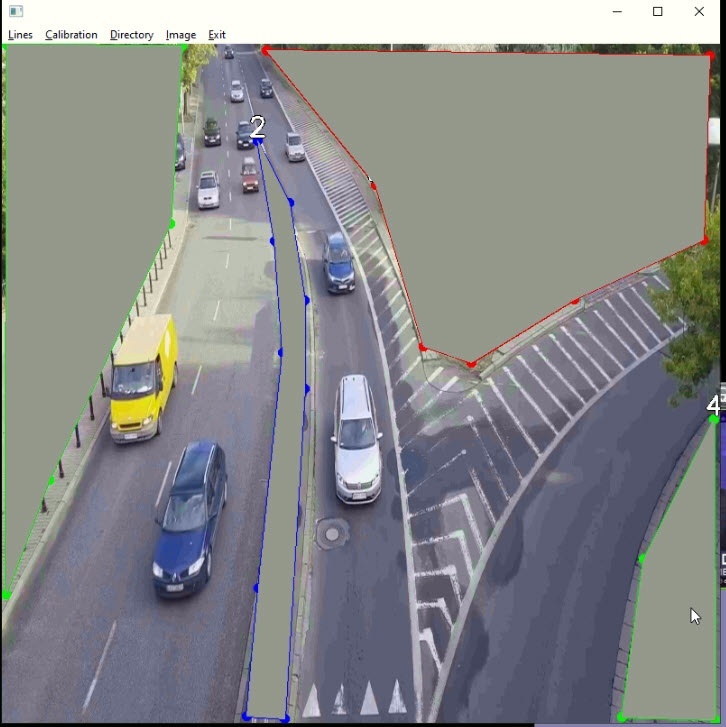
  5. Mark the borders of static objects:
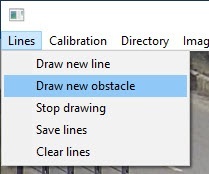
    1. Select the Lines Draw new obstacle item in the menu line.

    2. Mark the borders of static objects.
    3. Repeat steps 5a and 5b as many times as there are static objects in the frame.

  6. Specify the direction of movement on the lanes:
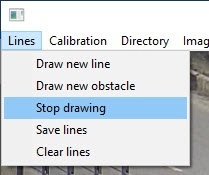
    1. Select the Lines Stop drawing item in the menu line.

    2. Point the arrows that appear on the lanes in the direction of traffic. This is required to generate an event of entering an oncoming lane.

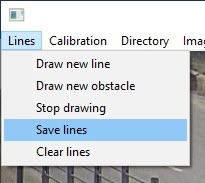
  7. Select the Lines Save lines item in the menu line to save the specified marking in the file of the JSON format next to the EXE file.

  8. Calibrate dimensions:
    1. Set the correspondence of pixels to meters:
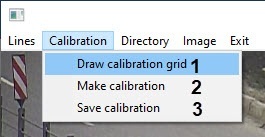
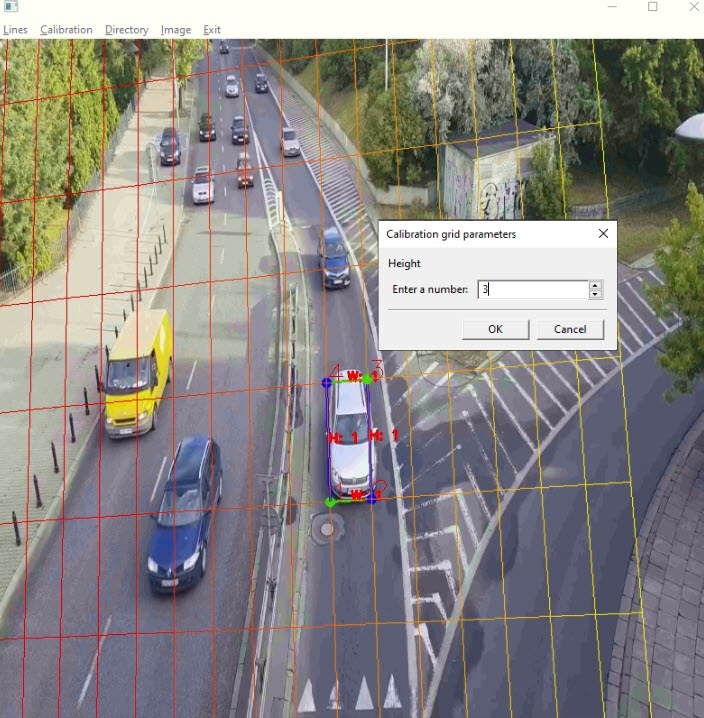
      1. Select the Calibration Draw calibration grid (1) item in the menu line to specify the dimensions of the calibration grid;

      2. Double-click a dimension. As a result, the window for editing the corresponding dimension of the calibration grid opens: Height or Width;

      3. In the Enter a number field, set the value in meters;
      4. Press the Enter key.
      5. Repeat steps 8aii-8aiv for the second dimension of the calibration grid.
    2. Select the Calibration → Make calibration item in the menu lineto calibrate dimensions according to the calibration grid specified in step 8a (2);
    3. Select the Calibration → Save calibration item in the menu lineto save the specified calibration in the file of the JSON format next to the EXE file (3).
  9. Select the Exit item in the menu line to close the editing utility.

  10. Click the Apply button.

...