
Go to documentation repository
Previous page Next page
To configure the Queue length detection module, use the settings panel of the Queue length detection object that is created on the basis of the Camera object on the Hardware tab of the System settings window.
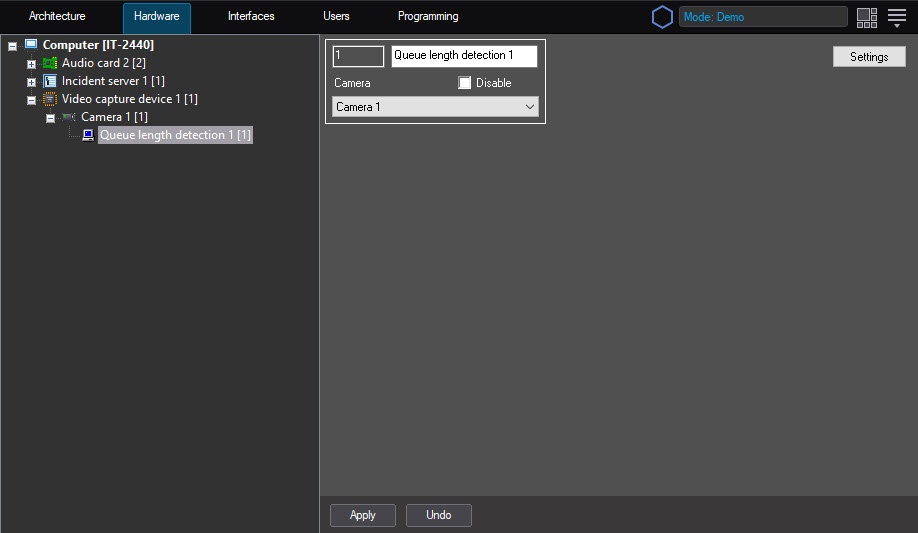
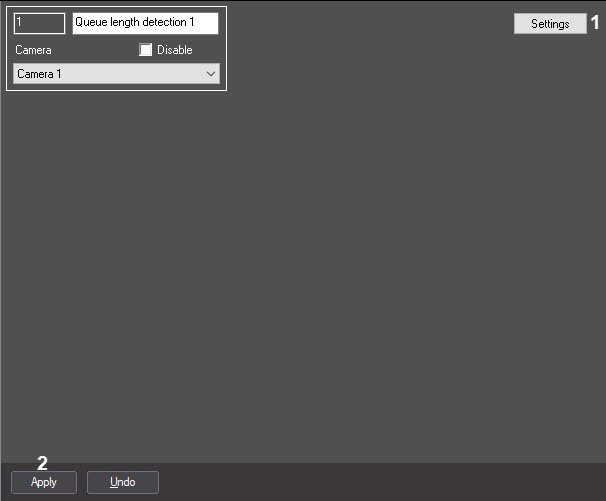
To configure the Queue length detection module, do the following:
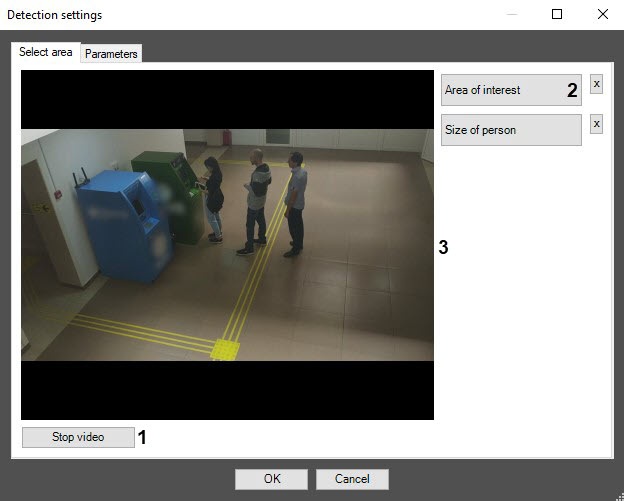
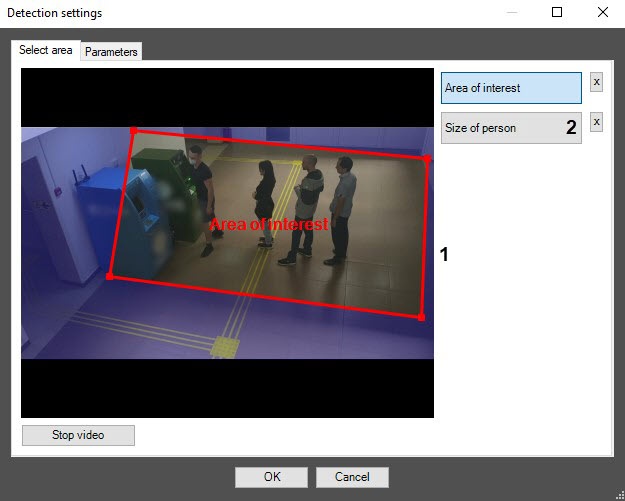
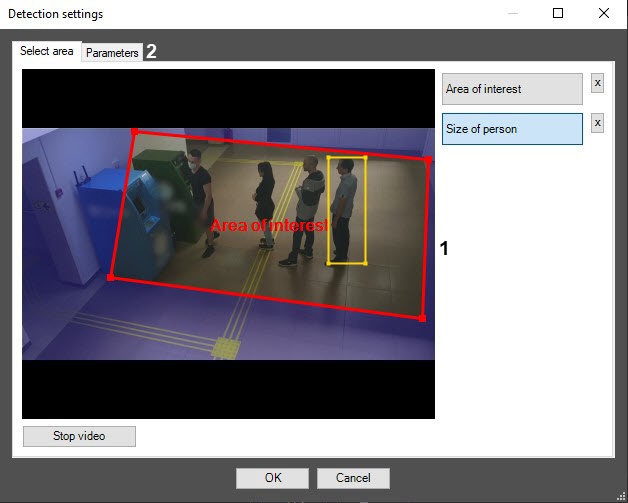
On the captured video frame (3), sequentially set the anchor points of the area using the left mouse button, the situation of which you want to analyze (1). You can add only one area. When you try to add the second area, the first one is deleted. After you add the area, the remaining part of the video image is darkened.
Note
To remove the area, click the button  next to the Area of interest button.
Attention!
Setting the Area of interest is the mandatory condition for the detector's operation.
On the captured video image (1), set the approximate size of a person. To do this, click the left mouse button and, by holding it, specify the rectangular area (1).
Note
To remove the person size, click the button  next to the Size of person button.
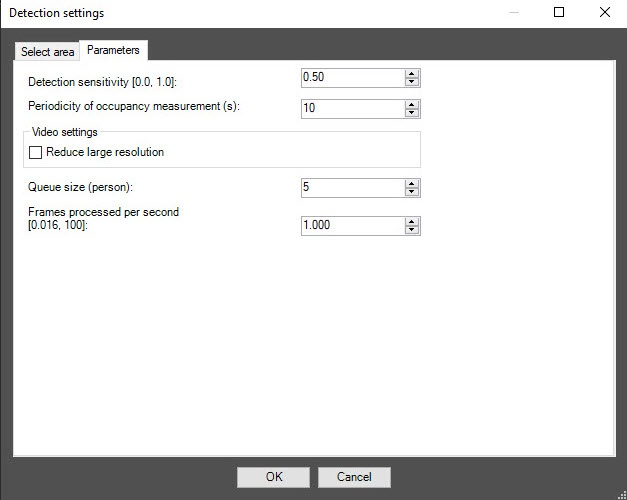
In the Periodicity of occupancy measurement (s) field, specify the time period in seconds for counting the number of people in the observed area. The minimum value of this parameter is the interval between frames of the analyzed video stream but cannot be less than one second, the maximum is 3600 seconds. The value of the parameter depends on the scene characteristics. For example, if the queue in the camera FOV doesn't change for a long time, the given parameter can be reasonably large. We don't recommend specifying the value of this parameter for more than 3-5 minutes for the correct operation of the algorithm on the average scene.
Note
The more often you measure the occupancy, the greater the load on the system.
In the Frames processed per second [0.016, 100] field, enter the number of frames per second that the detector processes. The higher the value, the more accurate the detector's operation, but the higher the load on the processor.
Note
You can find all events that are received from the Queue length detection object in the Event viewer interface window. For more details, see Obtaining traffic information in the area of interest.
Click the OK button to save the changes and return to the settings panel of the Queue length detection object.
Note
To return to the settings panel of the Queue length detection object without saving changes, click the Cancel button.
Configuring the Queue length detection module is complete.

