
Go to documentation repository
| Info | ||
|---|---|---|
| ||
You can use templates when you create a report. To add a new template, click Report templates → New template and fill in the Name and Description fields. The template will use the selected parameters of the current report. Templates work the same way as templates in the scheduler and can be used interchangeably. When you create a response using a template, click Report templates at the top of the page and select the required template from the list of saved templates (the required template is highlighted). As a result, the parameters of the current report are updated according to the selected template. |
In order to create a change protocol report, do the following:
Select the Change protocol report type (see Selecting a type of general report). As a result, the dialog window for specifying the report parameters will be displayed.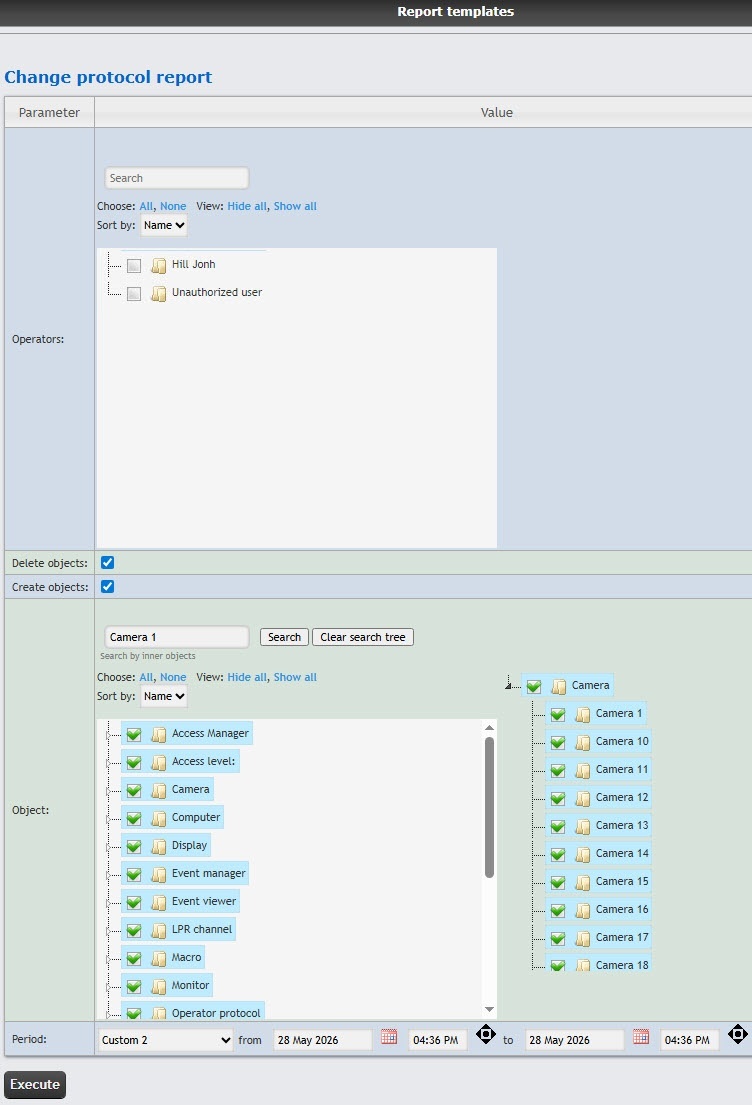
...
In the Operators field, set the checkboxes next to those users who have the rights to make
change. You can also use the search by operators. Be default, the list of operators is sorted by name. To sort by number, select this option from the Sort by drop-down listchanges. To select all users, click All, to deselect, click None. To expand the user structure, click Show all, to hide the user structure, click Hide all.
| Info | ||
|---|---|---|
| ||
The Unauthorized user value means a change of system by a user who wasn't authorized, or a user who was removed from the system, and/or a user who had their rights deleted. |
By default, the list of operators is sorted by name. To sort by number, select this option from the Sort by drop-down list.
You can find an operator using the search. To do this, enter the user's surname in the search field. The search starts from the first character, the result is highlighted in a different color.
In the Object field, set the checkboxes next to the objects
whichwhose changes you want to display in the report. To select all objects, click All, to deselect, click None. To expand the object structure, click Show all, to hide the object structure, click Hide all.
You can also use the search by objects. To do this, enter the name of the object (minimum four characters) in the Search by inner objects field and click the Search button. As a result, the found objects will be displayed in the additional object tree to the right. To cancel, click the Clear search tree button.
From the Period drop-down list, select the time period to build a report.
 button near the corresponding field to use the Calendar tool
To create a report, click the Execute button.
Example of a change protocol report: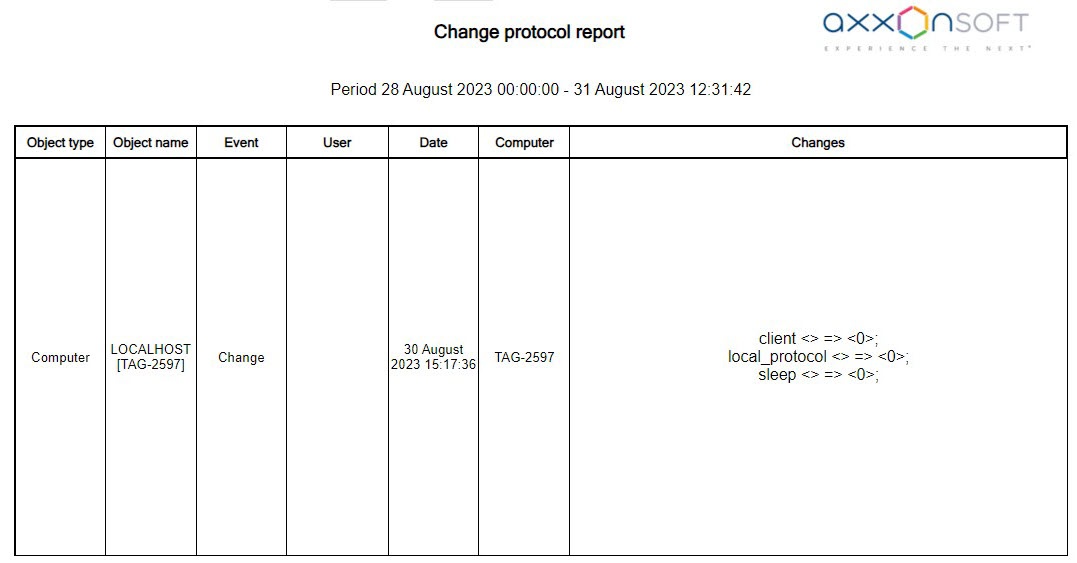
| Info | ||
|---|---|---|
| ||
The identifier of the object is indicated in square brackets |
at the end of the object name in the Object name field. The identifier of the user is indicated in square brackets at the end of the user name in the User field. In the created report, the objects are sorted by their identifiers and by the event date. All permanent access levels are displayed even if no changes have been made to them if the Show permanent access levels toggle is turned on in the settings of general reports (see The Settings tab of the general reports). All access levels are displayed if the Show all access levels toggle is turned on in the settings of general reports (see The Settings tab of the general reports). |
The change protocol report is created.

