
Go to documentation repository
Documentation for Axxon One 3.0/3.1 version. Documentation for Axxon One 2.0 version is also available.

Thumbnail search is used to quickly search for the required moment by sequentially dividing the selected time interval into fragments of the set duration. To do this, do the following:
- Open the required layout (see Configuration of layouts).
- Click the required camera.
- Click the Search button located in the lower right corner of the surveillance window (see Search in archive).
- Set the search interval (see Setting a search interval).
- Click the
 button.
 - Select Thumbnail search.
- Set the parameters specified in the table:
Parameter Value Description Thumbnail search Interval Set the time interval. We recommend setting the time range from 10 seconds and more
Attention!
If there are omissions in the archive, they aren't taken into account during the division into fragments. The archive with omissions is processed as the continuous sequence of data, that is, the parts with the missing data are logically "glued," after which the received continuous sequence is divided into equal fragments.

You can decrease the numerical value by using this button [minutes], [seconds] Set the time interval in the range [00, 60]. The default value is 00:00. If you don't set the duration of fragments, the search divides the selected time interval into fragments of equal duration 
You can increase the numerical value by using this button - Click the Search
 button.
Note
You can stop the searching process at any time. For this, click the Stop
 button, which replaces the button that starts the searching process.
The search results panel displays frames that are divided into fragments of equal specified duration.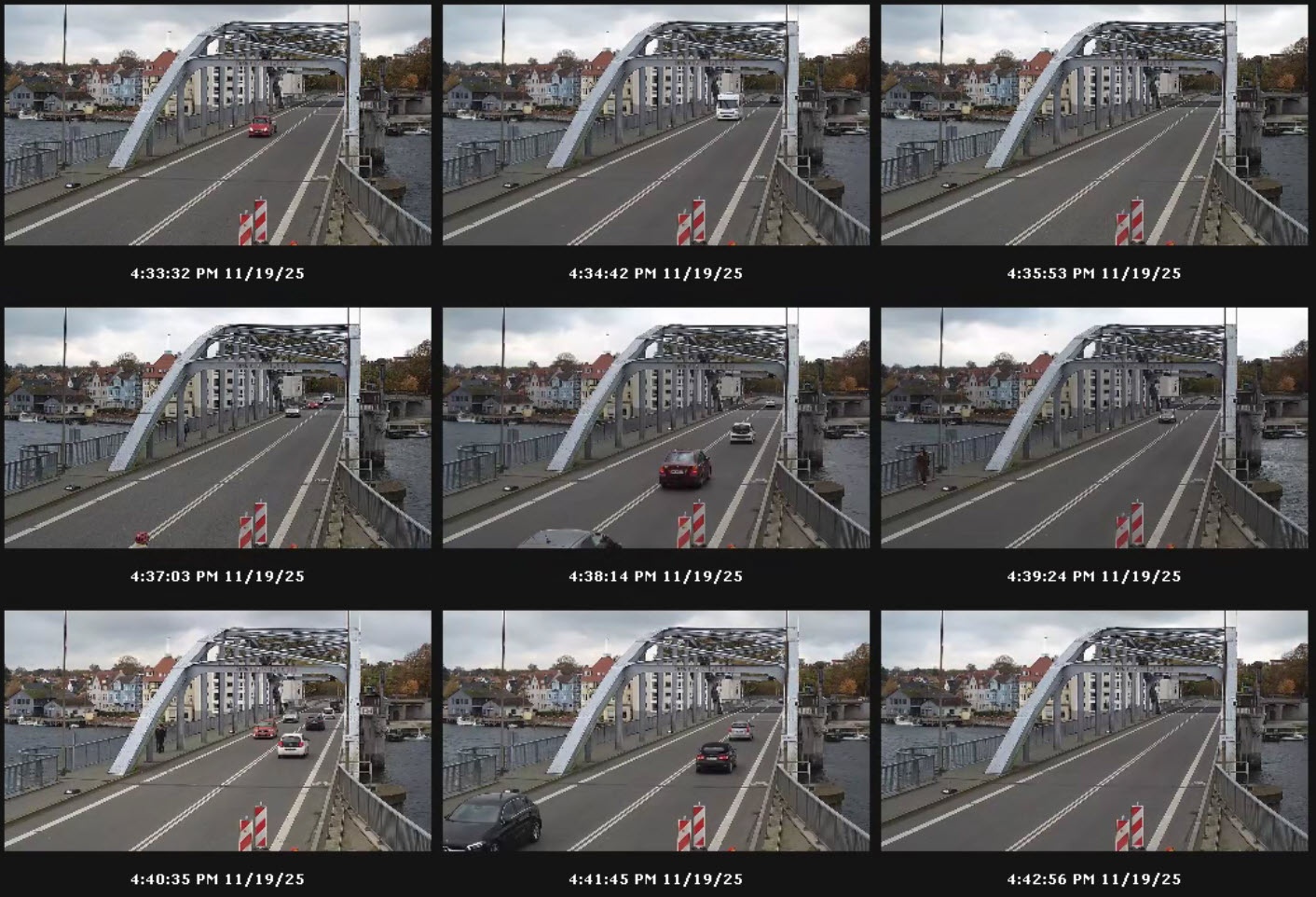
The number of displayed fragments on the results panel depends on the screen resolution and the fragment size. You can change the fragment size by using the  button.
On the search control panel, there is the number of found fragments.
If you don't find the required moment, you must search again: double-clicking the found moment activates the search within the time interval from the given moment to the next one. You must keep searching until the required moment.
Overview
Content Tools