
Go to documentation repository


On the page:
Purpose
The Operator protocol is used to process events registered by security system objects and search for events in the archive.
Functions
The operator protocol has the following functions:
- Display of events registered by security system objects in the interface window.
- Assignment of a status (type) to the registered event.
- Addition of a comment to an event.
- Event recording to the archive.
- Event search in the archive.
- Viewing event recording.
- Escalation of unprocessed events to the operator protocol of a higher level.
Interface description
The operator protocol interface is shown in the following figures.
The operator protocol interface. The Current events tab: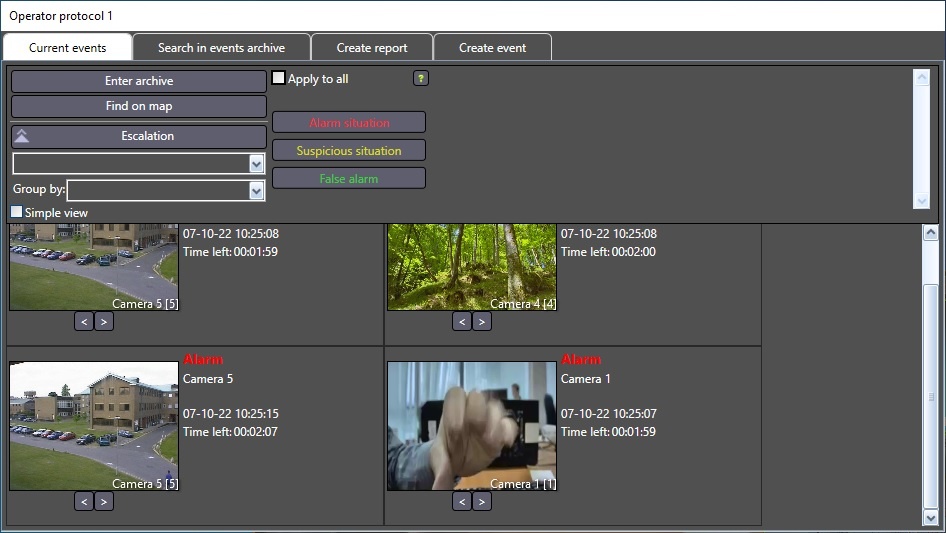
The operator protocol interface. The Search in events archive tab:
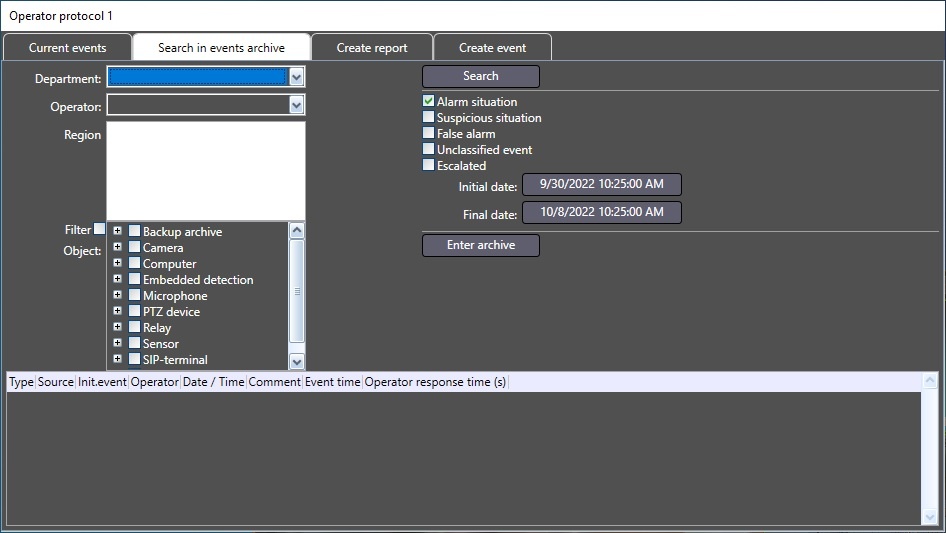
The operator protocol interface. The Create report tab:
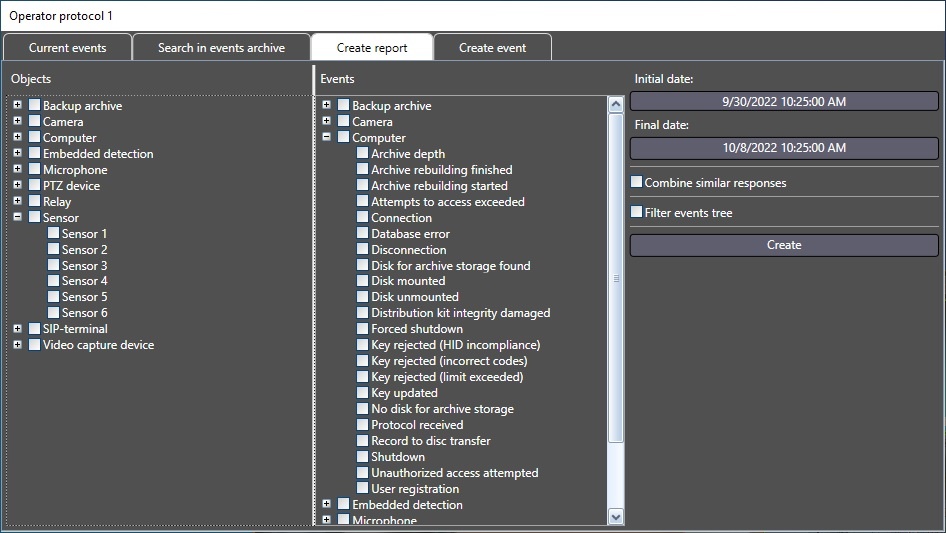
The operator protocol interface. The Create event tab:
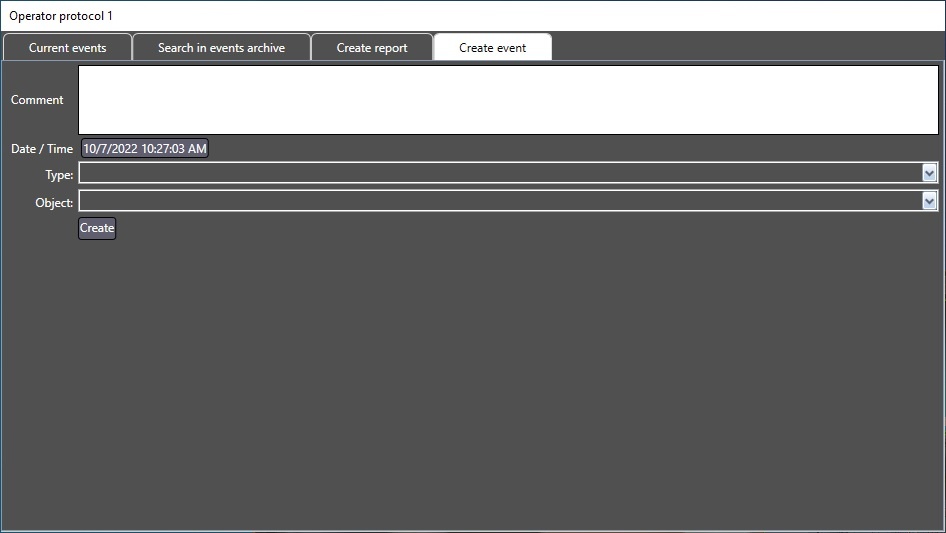
Interface elements of the operator protocol are described below.
The Current events tab
The event control panel is at the top of the Current events tab. The following elements can be found on this panel:
Note
The Enter archive, Find on map, Escalation, and Delay buttons can be inactive if you didn't configure their usage when configuring the Operator protocol object—see Setting the options for handling events in the Operator protocol section of Administrator's Guide.
You can also hide part of the interface using the GuiLayoutMode=1 parameter in the registry HKEY_LOCAL_MACHINE\SOFTWARE\WOW6432Node\AxxonSoft\PSIM\OperatorProtocol (see Axxon PSIM base version. For the information on working with the registry, see Working with Windows OS registry).
- The
 button is used to switch to the archive to view and export video of the event.
 The
 button is used to switch to the map layer where there is the source of the event.
The
 button is used to escalate the event.
Note
If the event has got the Escalated status, this event is displayed in the interface of the operator protocol of the higher level. If the Escalation button is inactive, it means that no superior interface is assigned to the current operator protocol.
Several superior interfaces can be assigned to the operator protocol, but escalation is performed to one of them. If more than one superior interface is assigned, then before clicking the Escalation button, select the required operator protocol of the higher level in the drop-down list that can be found below the Escalation button.
- The
 drop-down list is used to group the display of events by region, event, or object.
 - The
 checkbox is used to enable a simple display of events at the bottom of the Current events tab.
 The
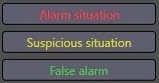 buttons are used to assign the type (status) to the event. You can change the names of buttons during system setup. If the system is configured accordingly, event processing buttons can be unavailable until you enter a comment. Also, if configured accordingly, the buttons can be missing when you select the row with the name of the event grouping.
The
 button is used to delay event processing once for a time period specified when configuring the operator protocol.
- The
 button to open the help file for processing the selected event.
 The field to enter a comment.
The comment field also contains the information about the completed tasks from the checklist (see below).
When you set the
 checkbox, the type assigned to the corresponding event is applied to all events in the Current events tab.
The
 checkbox is used for auto creation of a bookmark in the archive when the event is processed by the operator. The entered comment is used as the bookmark name.
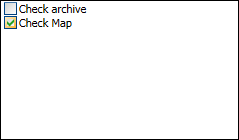
- The checklist contains the list of actions that must be performed by the operator during event processing.
The events are displayed at the bottom of the Current events tab. The display type depends on the settings configured on the control panel. The display options:
If you don't select any value in the Group by drop-down list and don't set the Simple view checkbox, then the bottom of the Current events tab displays the cells, each of which corresponds to one event. The number of horizontal cells is determined by the width of the Operator protocol window. The information on the event and the frames from the camera linked to the object from which the event is received are displayed in the cell (see Connection of objects with cameras). The name of the corresponding camera is displayed on the frame. If there are several cameras linked to the object, you can use the
 buttons to browse the screenshots.
Note
It is not necessary to configure the connection between the embedded detector and the camera to display event frames from the camera's embedded detectors.
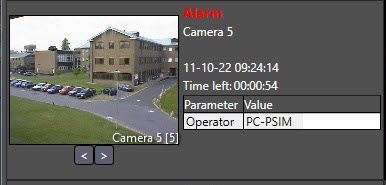
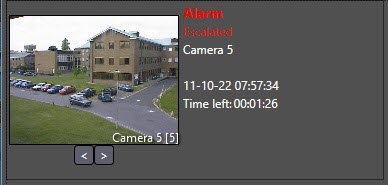
The cell contains the following information:- Name of the event in the system.
- Object that registered the event.
- Name of the Region object corresponding to the area where the event is registered.
- Date and time of event registration.
- Time left before the Unclassified event type is assigned to the event.
Information about event escalation or additional parameters.
Note
You can set the list of additional parameters when configuring the Operator protocol object (see Administrator's Guide).
- If you don't select any value in the Group by drop-down list and don't set the Simple view checkbox, then the bottom of the Current events tab displays a simplified list of events without the frames from the camera:
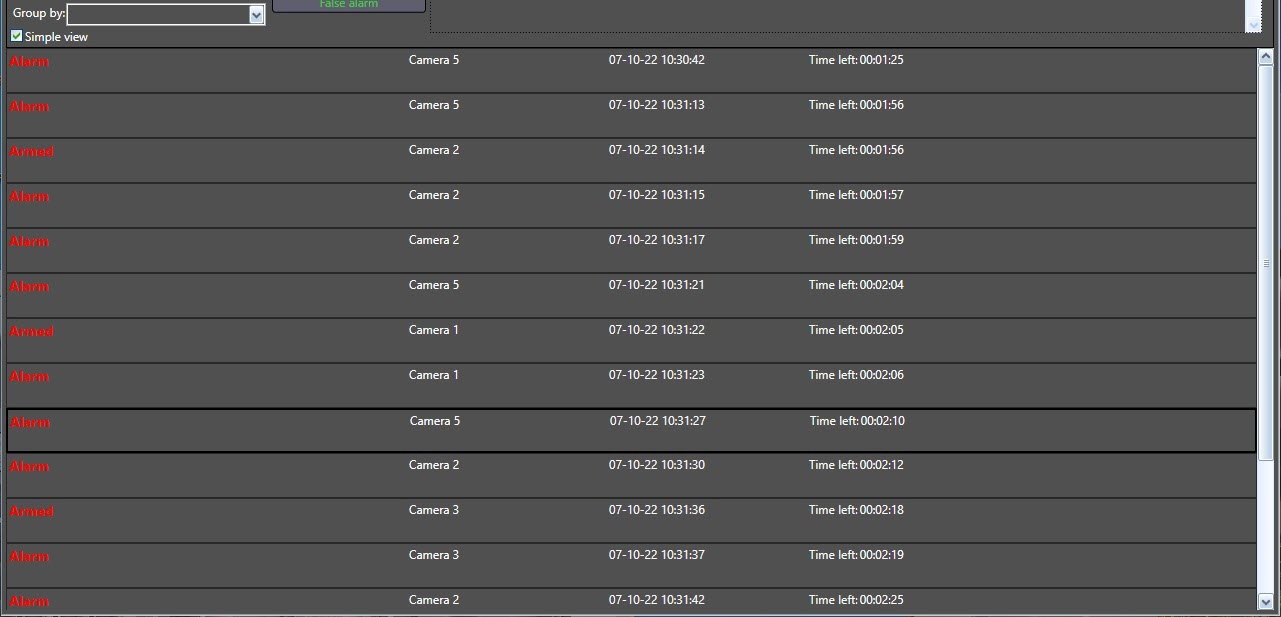
Each line corresponds to one event and contains the following information:- Name of the event in the system.
- Object that registered the event;
- Date and time of event registration.
- If you select any value in the Group by drop-down list, then the bottom of the Current events tab displays a list of groupings by the selected parameter. The list line contains the number of events in the grouping and the name of the parameter by which the events are grouped.
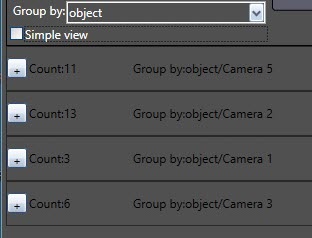
To view all events from the group, click the button. To hide the grouped events, click the
  button: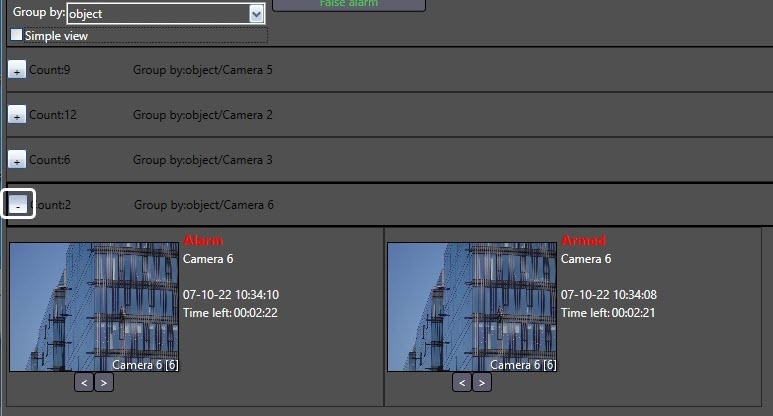
The content of the expanded group depends on whether you set the Simple view checkbox or not. If you don't set it, the events are displayed as cells. If you set the Simple view checkbox, then a simplified list is displayed.
The Search in events archive tab
The
 drop-down list is used to select the department to which the operator belongs. If the field is empty, all operators are available for selection.
The
 drop-down list is used to select the operator.
Select the region to which the object belongs
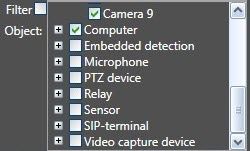
Enabling the filter by objects and object selection:
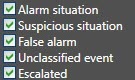
- The types of events the search is performed by:
- The
 button is used to set the initial date.
 - The
 button is used to set the final date.
 - The
 button is used to start the search.
 - The
 button is used to switch to the archive to view and export video of the event.
There is the table containing the search results at the bottom of the Search in events archive tab.
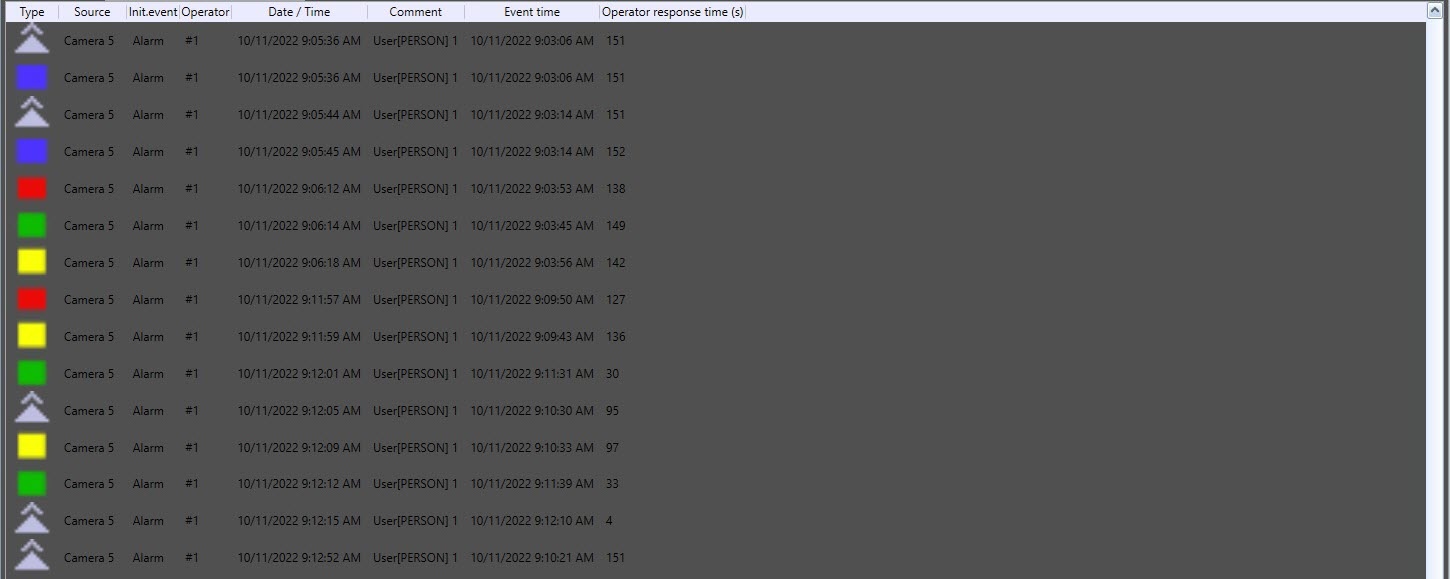
The description of the table is given below:
Column | Description |
|---|---|
Type | The icon of the event type |
Source | Source object of the event |
| Init.event | Initial event or information that the event was created by the operator on the Create event tab |
Operator | Operator who processed the event |
Date/Time | Date and time when the event was processed |
Comment | Operator's comment |
| Event time | Date and time when the event was registered in the system |
| Operator response time (s) | The time period in seconds between the registration of an event in the system and its processing by the operator. |
The Create report tab
- The list of objects by the events from which you can create the report:
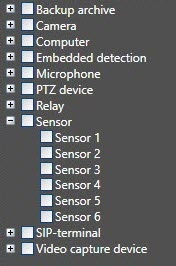
- The list of events by which you can create the report:
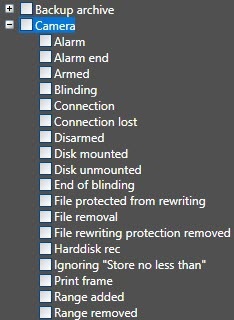
- The
 button is used to enter the date after which events get into the report.
 - The
 button is used to enter the date after which events do not get into the report.
 - The
 checkbox is used to display an event in the report only once. If you don't set the checkbox, one event is displayed for each operator protocol in the report.
 - The
 checkbox is used to filter the event list on the right according to the objects selected on the left (for example, if you select only the Camera objects, then only the Camera events are displayed).
 - The
 button is used to create a report.
The Create event tab
- The field is used to enter the description of the event:
 .
. - The
 button is used to enter the date and time of the event.
 - The
 drop-down list is used to select the data source type.
 - The
 drop-down list is used to select the source object of the event.
 - The
 button is used to create an event.
Overview
Content Tools